Large appliance removal includes bulky machines such as refrigerators, freezers, washers, dryers, stoves, and dishwashers. These appliances can be heavy and may have wires, pipes, gas lines, or refrigerant. Murrieta CA Junk Removal helps property owners prepare, move, and route unwanted appliances for reuse, recycling, or proper disposal.
Table of Contents
- What Is Considered a Large Appliance for Removal?
- Which Appliances Can a Junk Removal Service Pick Up?
- How Should You Prepare a Large Appliance for Removal?
- How Are Large Appliances Disposed Of or Recycled?
- Are There Special Disposal Rules for Refrigerators and Freezers?
- What Affects Large Appliance Removal Planning?
- When Should You Hire Professional Large Appliance Removal?
- Frequently Asked Questions
- Conclusion
What Is Considered a Large Appliance for Removal?
A large appliance is a heavy home machine that is hard to move by hand. Most need two or more people, special tools, or careful planning. They may contain metal, glass, wires, insulation, oil, or refrigerant.
Refrigerators, Freezers, and Other Cooling Appliances
Refrigerators, freezers, ice makers, and similar cooling units are large appliances. They have compressors and sealed cooling systems. Older units may also contain refrigerants that need careful recovery before recycling or disposal.
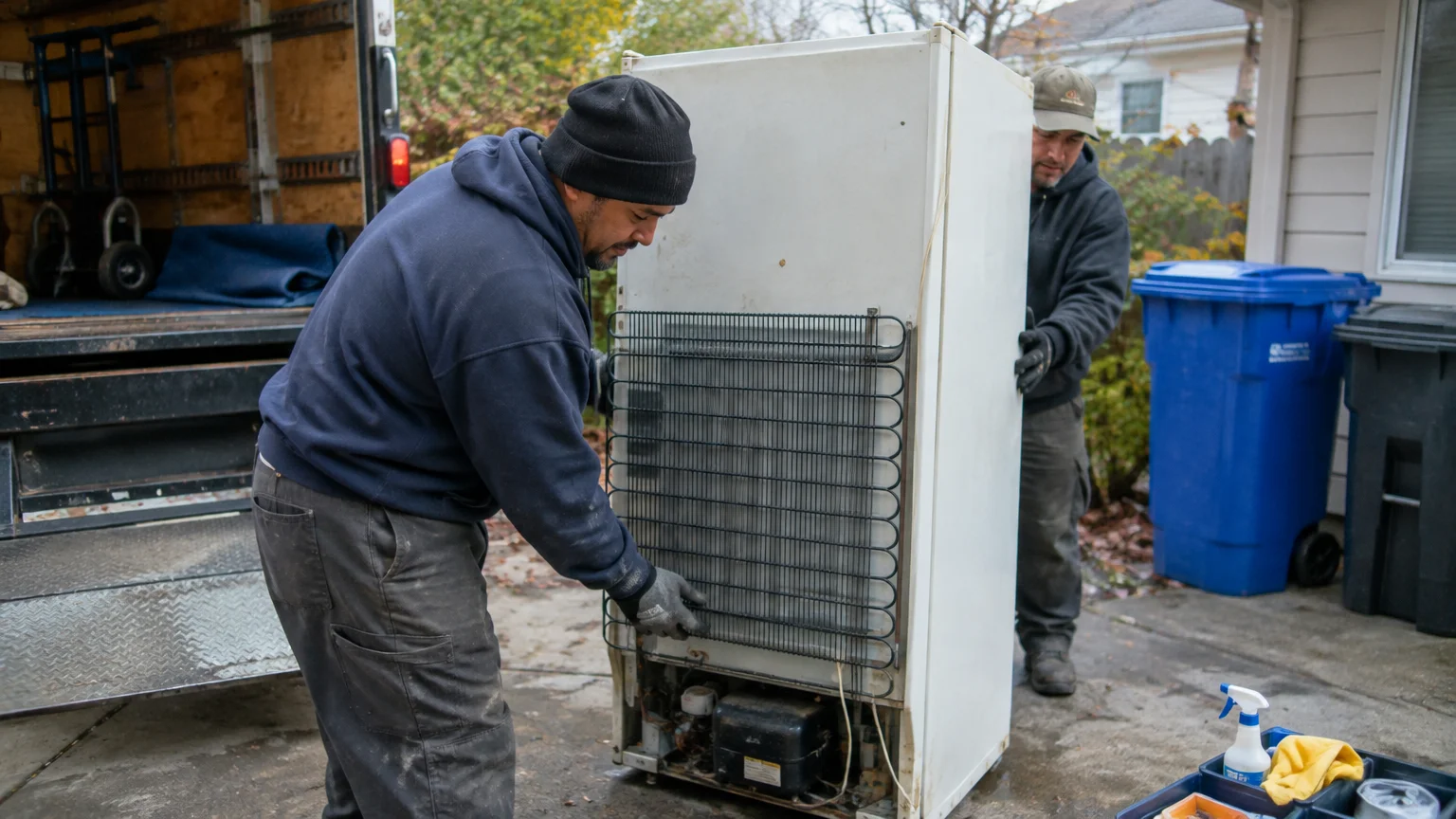
A refrigerator can be hard to move because it is tall, deep, and heavy. Doors should stay closed while it moves. Remove shelves, drawers, and loose parts before the unit leaves the home. This helps protect floors, walls, and the appliance.
Freezers also count as large appliances, even when they are smaller than refrigerators. Chest freezers can be hard to carry through narrow doors. Do not cut cooling lines, remove compressors, or release gas. Trained workers and approved facilities should handle those tasks.
Washers, Dryers, Stoves, and Dishwashers
Washers, dryers, ranges, ovens, and dishwashers are also large appliances. Washers may hold water and have heavy parts inside. Dryers can connect to electricity or gas. Stoves and ovens may have glass, wires, heating parts, and gas lines.
Dishwashers often sit under a counter. They may need water, drain, and electrical connections removed first. A built-in appliance may take more planning than a freestanding model.
Other items may qualify as large appliances, too. These can include trash compactors, large dehumidifiers, commercial-style cooking units, and some window air conditioners. A removal team can review the item and explain what preparation it needs.
Which Appliances Can a Junk Removal Service Pick Up?
A junk removal service can often pick up common household appliances. Acceptance depends on the item, its condition, its location, and local rules. Describe the appliance clearly when arranging service.
Common Household Appliances Accepted for Removal
Common pickup items include refrigerators, freezers, washers, dryers, stoves, ovens, ranges, and dishwashers. Some services also accept microwaves, compact refrigerators, water heaters, and dehumidifiers. Large appliance removal may cover one item or several appliances at the same property.
The appliance does not always need to work. Old, broken, stained, or outdated units may still have useful metal and parts. A team may sort these materials before taking the rest to the right facility.
Homeowners, landlords, businesses, and property managers may all need this service. A rental cleanout may include a broken washer. A kitchen update may leave an old stove behind. An office, restaurant, or apartment building may have larger equipment that needs review.
Oversized, Built-In, and Commercial-Style Appliances
Oversized and built-in appliances need extra planning. A commercial-style refrigerator may be wider and heavier than a home model. A built-in oven may be fixed inside cabinets. A stacked washer and dryer may need to be separated before removal.
Tell the service about stairs, tight halls, gates, elevators, and low doorways. These details help the crew plan safe movement. Photos can also help when an item is unusually large or hard to reach.
Some appliances need special handling or may not be accepted by every provider. This can include units with damaged refrigerant lines, unknown chemicals, severe contamination, or unsafe gas connections. A responsible service explains these limits before the appointment.
How Should You Prepare a Large Appliance for Removal?
Preparation makes large appliance removal safer and easier. Remove food, clothing, dishes, water, shelves, and loose parts. A qualified person should handle utility work when gas, hardwired power, or plumbing is involved.
Disconnecting Utilities and Emptying the Appliance
Unplug a simple appliance only when the plug is easy to reach and safe to remove. Do not pull on a cord, cut wires, or open a gas line. A licensed worker may need to disconnect gas appliances or hardwired units.
Empty refrigerators and freezers fully. Let wet appliances drain before moving them. Remove detergent, trays, racks, shelves, and other loose items. Clean spills so the path does not become slippery.
Secure a refrigerator door during transport, but do not seal it shut during long storage. After cleaning, the owner may leave the door slightly open while the unit stays in place. The removal team can explain safe short-term preparation.
Checking Access, Measurements, and Property Protection
Measure the appliance and compare it with doorways, halls, stairs, and gates. Check for sharp turns and low ceilings. Clear rugs, toys, boxes, and other trip hazards from the path.
Protect floors and walls when needed. A removal team may use moving blankets, straps, dollies, ramps, and other tools. Keep children and pets away from the work area during movement.
Do not drag a heavy appliance across the floor. Do not tip a refrigerator carelessly or carry a washer down stairs alone. Cleaning and clearing a safe path are tasks a homeowner can do. Utility work and heavy lifting may need professional help.
How Are Large Appliances Disposed Of or Recycled?
Large appliances are usually sorted by their materials and condition. Working items may go to a donation or resale group. Broken units may go to an appliance recycler, metal processor, transfer station, or another approved facility.
Appliance Recycling and Material Recovery
Appliance recycling means taking apart an old machine so useful materials can be recovered. Steel, aluminum, copper, glass, plastic, and wires may have another use. Motors and other parts may also be separated when safe.
Cooling appliances need extra care because their sealed systems may contain refrigerant, oil, or other controlled materials. A qualified facility can recover these materials before the remaining metal is processed. Never puncture a cooling line or remove a compressor without proper training.
Recycling routes differ across the United States. Local rules may depend on the city, county, state, facility, and appliance type. Murrieta CA Junk Removal can help property owners understand the next step for common household units.
Donation, Reuse, and Responsible Disposal Options
An appliance in good working order may be suitable for reuse. Donation groups, reuse centers, appliance stores, or community programs may accept some items. Acceptance often depends on age, condition, safety, cleanliness, and transport needs.
Broken appliances usually need a different route. A removal service may sort them before delivery to a recycling or disposal facility. This keeps bulky machines away from places that cannot safely accept them.
Do not leave appliances beside a road, in an empty lot, or near a dumpster without checking local rules. Illegal dumping can harm property and create safety risks. Responsible removal sends the item toward a suitable destination.
Are There Special Disposal Rules for Refrigerators and Freezers?
Yes. Refrigerators and freezers need special handling because their cooling systems may contain refrigerant. The system should stay sealed until a trained worker or approved facility handles it. Do not release refrigerant into the air or place a full cooling unit in ordinary trash.
Refrigerants, Compressors, and Environmental Requirements
Refrigerant is a chemical that moves heat through a cooling system. It travels through sealed lines, a compressor, and other parts inside the appliance. Older and newer units may use different refrigerants, so the model label can matter.
The U.S. Environmental Protection Agency explains refrigerant recovery requirements for workers and businesses that service or dispose of covered equipment. Local facilities may also have their own acceptance rules.
A homeowner can empty and clean the unit. The homeowner should not cut lines, remove the compressor, or drain oil. If the unit leaks, keep people away and tell the removal service before the appointment.
Why Refrigerators Need Different Handling
A refrigerator has more than a large metal cabinet. It may contain refrigerant, insulation, wires, glass shelves, plastic parts, and a compressor. Safe removal protects workers, the property, and the environment.
Freezers may have the same concerns. A chest freezer can be hard to lift because its weight sits low and its shape is wide. The service may need a clear path and special moving equipment.
The provider should know whether the appliance still has its cooling system, whether it is damaged, and whether it has touched chemicals or floodwater. Clear details help the provider choose a safe disposal route.
What Affects Large Appliance Removal Planning?
Removal planning depends on the appliance, property, and disposal route. Share the number of items, their size, their condition, and their location. The final service details are confirmed after the provider reviews the job.
Number, Size, Weight, and Type of Appliance
One small dishwasher is easier to plan than several full-size appliances. A wide refrigerator, stacked laundry unit, or commercial range may need more workers and equipment. A damaged appliance may also need careful handling because it can have sharp edges or loose parts.
The item type affects the next step. Refrigerators and freezers may need refrigerant handling. Gas ranges may need safe utility disconnection. Washers may hold leftover water. Dishwashers may still connect to plumbing or cabinets.
Help the provider by sharing clear descriptions and photos. Explain whether the appliance is inside, outside, upstairs, in a garage, or behind a gate. This helps the service plan the visit without guessing.
Access, Labor, Transportation, and Disposal Requirements
Access is a major part of removal planning. Stairs, narrow doors, long walks, uneven ground, and elevators can change how the item moves. Property protection also matters when the path passes through finished rooms.
Transportation and disposal needs depend on the appliance. Some facilities accept mixed metal. Others require cooling units, gas appliances, or electronic parts to arrive separately. A responsible provider checks the route before leaving the property.
The work may need more planning than a small curbside item because large appliances need careful handling and disposal. The provider confirms the final service details after reviewing the job. Ask what preparation is needed and which items the service can accept.
When Should You Hire Professional Large Appliance Removal?
A professional is a good choice when an appliance is heavy, awkward, connected to utilities, or hard to reach. Homeowners do not need a professional for simple cleaning, emptying, or clearing a safe path. Get help when moving the item could cause injury or property damage.
Signs a Pickup Is Safer Than DIY Removal
Professional help is often safer when:
- The appliance must travel down stairs or through a tight doorway.
- The item is too heavy for the people available to move it safely.
- The unit connects to gas, plumbing, or hardwired electricity.
- The refrigerator or freezer may still contain refrigerant.
- The appliance has sharp damage, broken glass, or unstable parts.
- The owner lacks a proper dolly, straps, ramp, or moving blankets.
Do not risk a back injury to move an unwanted appliance. The same rule applies to cutting pipes, wires, or cooling lines. Simple preparation helps, but unsafe disconnection and lifting should be left to qualified workers.
What to Expect From a Responsible Removal Service
A responsible service asks useful questions before pickup. It confirms the appliance type, location, access route, condition, and utility status. It also explains which items may need another provider or facility.
The team should protect the property while moving the appliance. It should avoid dumping and follow suitable recycling or disposal routes. The owner should receive clear instructions about preparation and the next steps.
Murrieta CA Junk Removal helps property owners plan large appliance removal with a clear process. The team can review the appliance and discuss the safest next step for the property.
Frequently Asked Questions
Can an old refrigerator go in a dumpster?
An old refrigerator should not go into a regular dumpster unless the dumpster provider and local facility allow it. Refrigerators may contain refrigerant and other parts that need special handling. A qualified appliance removal service can help send the unit to an approved recycling or disposal facility.
Who takes old freezers?
Junk removal companies, appliance recyclers, transfer stations, and some retailers may take old freezers. Acceptance rules vary by location and condition. Explain whether the freezer is empty, damaged, leaking, upstairs, or still connected before arranging pickup.
Can a homeowner remove a washer or dryer alone?
A homeowner may prepare a washer or dryer by emptying it and clearing the path. Moving the unit alone is usually unsafe because the appliance is heavy and awkward. Gas dryers, hardwired units, stairs, and tight spaces call for qualified help and proper moving equipment.
Are large appliances recycled after pickup?
Many large appliances go through reuse, recycling, or approved disposal channels. Metal, wires, plastic, glass, and selected parts may be recovered. Refrigerators and freezers need added care because their cooling systems may contain refrigerant.
How should a dishwasher be prepared for removal?
A dishwasher should be emptied and cleaned, with dishes and loose parts removed. Water and electrical connections may need safe disconnection before removal. Since many dishwashers sit under counters, a qualified worker may need to handle plumbing, wires, cabinet attachments, or tight access.
Key Takeaways
- Large appliances include refrigerators, freezers, washers, dryers, stoves, ovens, and dishwashers.
- Owners can empty appliances and clear paths, but utility work may need qualified help.
- Refrigerators and freezers need special handling because they may contain refrigerant.
- Recycling, reuse, and disposal routes depend on the appliance and local facility rules.
- Careful planning protects people, floors, walls, and the environment.
Conclusion
Large appliance removal is more than carrying a heavy machine outside. The appliance may have plumbing, gas, wires, refrigerant, glass, or sharp metal parts. Preparation helps, but safe disconnection, lifting, transport, and disposal may need professional tools and skill.
For homeowners, landlords, businesses, and property managers, the first step is to identify the appliance. Then explain its condition and location. Murrieta CA Junk Removal serves Murrieta and can help plan a responsible next step for unwanted large appliances.
If you are unsure what to do, Murrieta property owners can Contact us today to discuss appliance removal needs. Murrieta CA Junk Removal can help you understand the safest next step.
If you are not sure what you are dealing with, it is worth having someone look at it before it turns into a bigger job. Get in touch with Murrieta CA Junk Removal today and we will tell you where you stand.