Appliance recycling vs disposal depends on the unit’s condition, materials, and local rules. Recycling is often the better eco choice because it recovers metal, plastic, glass, and other useful parts. Disposal may still be needed for unsafe or damaged appliances. Safe removal also helps prevent leaks, injuries, and illegal dumping in Murrieta.
Table of Contents
- Is appliance recycling better than disposal?
- Which old appliances can be recycled?
- What happens to appliances during recycling?
- When should an old appliance be donated instead?
- What are the environmental risks of improper appliance disposal?
- How can homeowners prepare appliances for eco-friendly removal?
- How do you choose an appliance removal option?
Is appliance recycling better than disposal?
Appliance recycling is usually better than disposal when a unit can be taken apart safely. Recycling means processing an old product so its materials can be used again. Disposal means sending the item to a landfill, transfer station, or approved waste facility.
Recycling can reduce the amount of waste sent to landfills. It also helps recover materials for use in other products. Large appliances often contain steel, aluminum, copper, plastic, glass, and wiring. These materials should not be handled like normal household trash.
The best choice depends on the appliance’s condition. A working refrigerator may be reused or donated. A broken washer may need a recycling center or appliance removal service. A unit with leaking fluids needs special care before anyone moves it.
Murrieta CA Junk Removal helps Murrieta homeowners, landlords, and business owners sort through these choices. The right option may include donation, recycling, parts recovery, or approved disposal. The goal is to keep useful materials in use and handle unsafe parts correctly.
What makes appliance recycling an eco-friendly choice?
Recycling keeps heavy materials out of the waste stream. It can also reduce the need to mine and process new raw materials. Reuse is often better because the whole appliance stays in service.
Still, recycling must happen through the right channel. Taking an appliance to a general dump does not make the process eco-friendly. A responsible provider should explain where the unit goes and how special parts are handled.
When might disposal be necessary?
Disposal may be needed when an appliance is badly damaged, unsafe, contaminated, or not accepted by a recycling facility. Some old units have parts that need trained handling. Local facilities may also have strict rules for refrigerators, freezers, and air-conditioning equipment.
Disposal should mean an approved facility, not a vacant lot, alley, or curb without permission. Property owners should check local collection rules before leaving a large appliance outside. These rules can differ by county, city, and waste district.
Which old appliances can be recycled?
Most large household appliances contain materials that can be recovered. Refrigerators, freezers, washers, dryers, stoves, ovens, and dishwashers may all qualify for recycling. Acceptance depends on the facility, the appliance’s condition, and any special materials inside.
A recycling center may ask for the make, model, size, or type of appliance. It may also require doors to be removed or fluids to be drained by an approved professional. Owners should not guess about these steps because unsafe preparation can cause injury or damage.
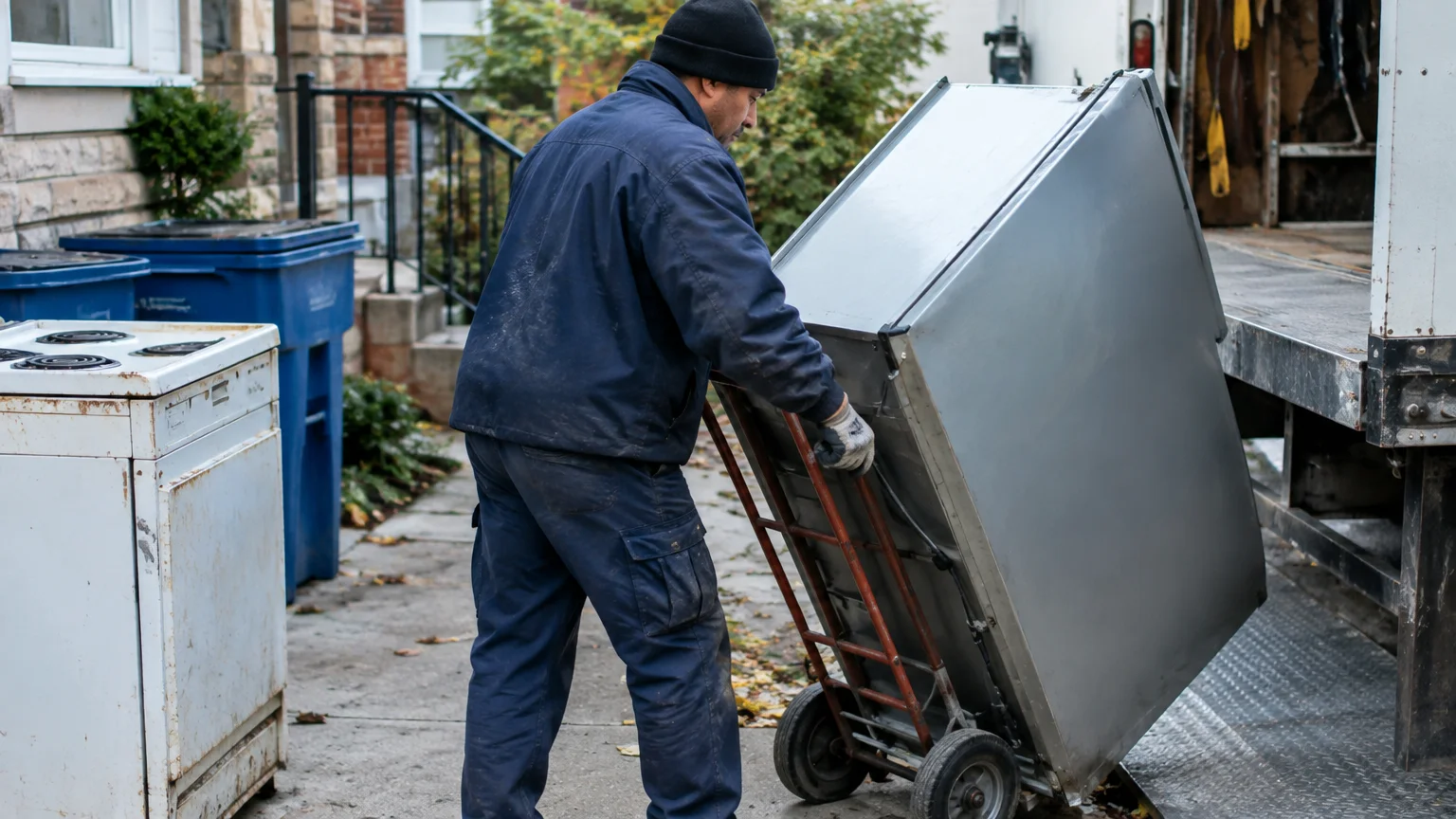
Appliance Removal can help with heavy units that one person cannot move safely. This can matter during a home renovation, rental turnover, office change, or property cleanout. It can also help owners avoid leaving bulky items beside a road.
How are refrigerators and freezers handled?
Refrigerators and freezers need special care because they may contain refrigerant. Refrigerant is a chemical used to create cooling. Owners should ask a qualified worker how it will be handled before the appliance is crushed or taken apart.
Many units also contain insulation, oils, wiring, shelves, and electronic controls. A proper facility can separate these materials and send them through the correct process. Owners should never cut cooling lines, puncture tanks, or remove sealed parts at home.
People searching for who takes old freezers should ask whether the provider accepts cooling appliances. They should also ask whether refrigerant recovery is part of the handling process.
Can washers, dryers, stoves, and dishwashers be recycled?
Washers, dryers, stoves, ovens, and dishwashers are often recyclable because they contain large amounts of metal. Motors, drums, heating parts, wiring, controls, and plastic pieces may be separated during processing.
Gas stoves and dryers need extra care. A gas line must be shut off and disconnected safely. Electric units should also be unplugged before pickup. A homeowner should not move a connected appliance across a room or down steps without proper equipment.
Dishwashers can contain water, hoses, wiring, and sharp metal edges. A removal team can protect floors and walls while carrying the unit out. This helps when the appliance is built into cabinets or sits in a tight kitchen.
What happens to appliances during recycling?
Recycling usually begins with inspection and safe preparation. The appliance is checked for fluids, gas connections, batteries, electronics, and reusable parts. Workers then take it apart or process it so different materials can be separated.
The exact process depends on the appliance. A refrigerator needs refrigerant recovery. A washer may be separated into steel, copper, plastic, and electronic parts. A stove may contain steel, glass, wiring, and gas-related components.
How are metals, plastics, and glass recovered?
Steel is often separated with large magnets. Other metals may be sorted by weight, size, or special equipment. Copper wiring and aluminum parts can be recovered for use in new products.
Plastic pieces may be sorted by type. Some plastic can be cleaned and processed into new products. Glass shelves, oven doors, and cooktops may need separate handling because they can break into sharp pieces.
The process turns one bulky appliance into several material groups. This is why an appliance should go to a facility that accepts its type. A general trash load may not receive the same level of sorting.
Why must refrigerants and other hazardous materials be removed?
Refrigerants, oils, batteries, and some electronic parts can harm people or the environment when handled poorly. They may leak during crushing, cutting, or transport. Special handling keeps these materials contained and sends them through approved channels.
Owners should not drain refrigerant or cut sealed cooling lines. They should also avoid removing gas valves, motors, or heavy parts without training. Safe handling protects the person doing the work and everyone nearby.
For that reason, an eco-friendly removal plan includes more than finding a place to dump an old unit. It includes safe lifting, transport, processing, and material recovery.
When should an old appliance be donated instead?
Donation may be the best option when an appliance still works well, looks safe, and meets the receiving group’s needs. Reuse keeps the full product in service instead of breaking it into parts. It may also help another household, tenant, or organization.
A working appliance is not automatically ready for donation. It should be clean, complete, safe, and free from serious damage. Some groups will not accept units with missing cords, broken doors, heavy rust, or uncertain cooling performance.
How do you decide whether an appliance is reusable?
Start by testing the main function. A refrigerator should cool properly. A washer should fill, drain, and spin without unsafe noise. A dryer should run with a safe vent setup. A stove should heat evenly, and a dishwasher should complete a cycle without leaks.
The appliance should also have a secure door, intact cord, and stable frame. Small marks may not matter, but sharp edges and exposed wires are serious concerns. If the unit cannot be tested, recycling may be more responsible than donation.
A property owner should consider age, repair history, energy use, and likely transport needs. An appliance that fails soon after donation may create more trouble for the receiving group.
What should you check before donating a working unit?
Each charity, reuse center, and community group sets its own rules. Some accept only certain brands or sizes. Others require the owner to deliver the item or show that it works.
Owners should ask about pickup, cleaning, testing, and acceptance before moving the appliance. They should remove food, clothing, dishes, and personal information from connected smart devices. Manuals, racks, trays, and small parts should stay with the unit when possible.
If donation is not available, Murrieta CA Junk Removal can help Murrieta property owners choose another responsible option. That may include appliance recycling, parts recovery, or approved disposal.
What are the environmental risks of improper appliance disposal?
Improper appliance disposal can cause pollution, injury, property damage, and blocked access. Large units may tip over, trap children, or create sharp hazards. They may also release fluids or chemicals when damaged.
Leaving an appliance in an alley or empty lot can lead to illegal dumping. It can attract pests and create problems for nearby residents. It may also result in removal costs or local enforcement action for the property owner.
How can abandoned appliances harm people and the environment?
Old appliances often have heavy doors, sharp panels, and exposed wiring. A child or pet may climb inside a discarded refrigerator or freezer. Broken glass and metal edges can also injure anyone who handles the unit.
Leaks can affect soil, pavement, storm drains, or nearby water. Damaged insulation and electronic parts may add more waste to the area. Even when the harm is not visible, the appliance may still need special handling.
Safe removal lowers these risks. It also keeps sidewalks, rental properties, loading areas, and business spaces clear. This matters during moves, remodels, evictions, and cleanouts.
Why do local disposal rules matter?
Local rules explain which facilities accept large appliances and how residents should prepare them. Some communities offer scheduled bulk pickup. Others require delivery to a transfer station or recycling center.
Rules may also change based on the appliance type. Refrigerators, freezers, and gas units often have different requirements than metal washers or dishwashers. Homeowners in Murrieta should confirm the current process before placing any unit outside.
Service-area providers may know common local requirements, but the owner remains responsible for following official instructions. A quick check with the local waste authority can prevent delays and rejected loads.
How can homeowners prepare appliances for eco-friendly removal?
Preparation starts with safety. Clear a path from the appliance to the exit. Remove food, clothing, dishes, shelves, loose parts, and personal items. Keep children and pets away while the unit is being moved.
Do not lift a large appliance alone. Do not drag it across finished floors. Moving blankets, straps, ramps, and appliance dollies can help, but they must be used correctly. A professional team may be safer when the unit is heavy, built in, or located upstairs.
What should you do before pickup?
A homeowner should complete these steps before the removal team arrives:
- Empty and wipe down the appliance so loose items do not spill.
- Unplug electric units and let heated parts cool completely.
- Shut off gas or water connections through a qualified person when needed.
- Remove shelves, racks, hoses, and loose pieces only when safe.
- Measure doorways, halls, stairs, and gates along the planned removal path.
- Tell the provider about steps, tight turns, gates, or built-in appliances.
The owner should keep manuals and small parts with a working unit meant for donation. For recycling, loose parts may be handled separately. A provider may give different preparation instructions based on the appliance.
Which appliances require special handling?
Refrigerators and freezers require refrigerant care. Gas stoves and dryers require safe disconnection. Built-in dishwashers may need cabinet or water-line work before removal. Units with damaged batteries, leaking fluids, or exposed wiring need extra caution.
A homeowner should not cut lines, puncture tanks, or take apart sealed systems. The safest choice is to describe the appliance clearly before pickup. Photos may help a provider understand the size and condition without risky movement first.
How do you choose an appliance removal option?
The best option depends on condition, access, timing, and local acceptance rules. Donation fits clean, working units. Recycling fits many broken metal appliances. Approved disposal may be needed for unsafe or rejected items.
A professional appliance pickup can help when the unit is too heavy, hard to reach, or unsafe to move. This is common for refrigerators in garages, washers in basements, and built-in dishwashers in narrow kitchens. It can also help businesses clear several units during a renovation or property change.
Murrieta CA Junk Removal serves customers and can discuss the practical removal path for each appliance. The service may include lifting, loading, transport, and sorting for recycling or disposal. Actual handling depends on the unit and the site.
When is professional appliance pickup useful?
Professional pickup is useful when moving the appliance could damage floors, walls, stairs, or the unit itself. It also helps when a property owner lacks a suitable vehicle. Large appliances may not fit safely in a personal car, trailer, or small truck.
It can be especially helpful for landlords, real estate professionals, office managers, and homeowners handling a cleanout. One organized pickup may remove several bulky items from a property at once. The provider should still explain which items are accepted before the visit.
What questions should you ask about recycling and disposal?
Good questions help a customer understand what happens after pickup. The provider should answer clearly and avoid vague claims about eco-friendly handling.
- Which appliance types can the provider accept?
- Does the provider handle refrigerators and freezers safely?
- Where do reusable, recyclable, and non-recyclable items go?
- Does the customer need to disconnect gas, water, or electric lines?
- Are there stairs, narrow paths, or built-in units to report?
- What should stay with an appliance intended for donation?
Frequently Asked Questions
Is recycling always better than throwing away an appliance?
Recycling is usually the better choice when a facility can safely accept the appliance. It helps recover metal, plastic, glass, and useful parts. Disposal may still be needed for contaminated, damaged, or rejected units. The key is using an approved facility rather than leaving the item in an illegal dumping area.
Who takes old refrigerators and freezers?
Appliance recycling centers, local waste programs, retailers, and professional removal providers may accept old refrigerators and freezers. Each option has its own rules. The owner should ask whether refrigerant recovery is handled correctly and whether the unit must be prepared before pickup.
Can a broken washer or dryer be recycled?
Many broken washers and dryers can be recycled for their metal, wiring, motors, and other parts. Acceptance depends on the facility and the appliance’s condition. A professional pickup can help when the unit is too heavy to move or sits in a tight space.
Should a working appliance be donated or recycled?
A working appliance should be considered for donation when it is clean, safe, complete, and reliable. Donation rules vary, so the receiving group should confirm acceptance first. If the appliance has serious damage, missing parts, or unsafe wiring, recycling may be the better option.
What should homeowners do with an appliance that contains refrigerant?
Homeowners should not cut cooling lines or release refrigerant themselves. They should use a provider or facility that handles the unit through the proper process. The appliance should remain intact until qualified workers recover the refrigerant and prepare it for recycling or approved disposal.
Key takeaways
- Recycling is usually better than disposal when the appliance can be processed safely.
- Working units may be better candidates for donation and reuse.
- Refrigerators and freezers need special refrigerant handling.
- Gas, water, electric, and built-in connections should be handled with care.
- Local rules decide where large appliances can be taken.
Conclusion
Appliance recycling vs disposal is not one choice for every old unit. A clean, working appliance may deserve donation. A broken metal appliance may go to recycling. A damaged or unsafe unit may need approved disposal and special handling.
Careful preparation protects people, property, and the environment. It also gives useful materials a better chance of being recovered. For appliance removal in the main Murrieta area, from Old Town Murrieta and California Oaks to Temecula, Wildomar, Menifee, Lake Elsinore, and nearby communities, Contact us to arrange responsible pickup and handling.
If you are not sure what you are dealing with, it is worth having someone look at it before it turns into a bigger job. Get in touch with Murrieta CA Junk Removal today and we will tell you where you stand.