An appliance pickup service can safely remove refrigerators, freezers, washers, dryers, stoves, ovens, and dishwashers. The crew handles heavy lifting and sorts materials for recycling or proper disposal. Before pickup, empty each appliance, clear a safe path, and avoid disconnecting gas or hardwired units yourself.
Table of Contents
- What appliances can an appliance pickup service remove?
- How are refrigerators and freezers removed responsibly?
- Can a pickup service remove washing machines and dryers?
- How are stoves and ovens prepared for appliance pickup?
- Can dishwashers be removed from kitchens safely?
- What should you do before an appliance pickup service arrives?
- How do you choose a responsible appliance pickup service?
What appliances can an appliance pickup service remove?
An appliance pickup service can often remove large appliances from homes, rentals, offices, and commercial spaces. Common items include refrigerators, freezers, washing machines, dryers, stoves, ovens, and dishwashers. Some full-service junk removal companies can also take small appliances, shelving, boxes, and damaged furniture during the same visit.
The work depends on the appliance, its size, and the access route. A crew may carry an item from a kitchen, laundry room, garage, basement, or storage area. Tell the service about stairs, narrow halls, elevators, gates, and tight parking areas when you arrange the pickup.
Refrigerators, freezers, washers, and dryers
Refrigerators and freezers need extra care because they have cooling systems. Washers and dryers are heavy and may connect to water, gas, or electricity. A trained crew can look over the setup and explain what must be disconnected before the unit moves.
Homeowners can remove food, detergent, loose shelves, and personal items. They can wipe spills and clear the space around the appliance. They should not cut lines, remove gas fittings, or work on hardwired electrical connections without the right training.
Stoves, ovens, and dishwashers
Stoves and ovens may use electricity, natural gas, or propane. Dishwashers are often built into cabinets and connect to plumbing and power below the counter. These details make removal different from moving a loose appliance.
Murrieta CA Junk Removal helps property owners plan appliance removal around these needs. The team can review the item, the access route, and connection concerns before pickup. This early check helps protect floors, walls, cabinets, and door frames in Murrieta.
How are refrigerators and freezers removed responsibly?
Refrigerators and freezers need careful handling because they contain cooling systems. Refrigerant is a chemical that helps move heat from inside the appliance. A homeowner should never puncture, cut, or release the cooling lines.
A responsible crew checks the appliance and the route first. Workers may secure the doors, cover nearby surfaces, and use moving tools to control the load. If the unit still contains refrigerant, it should go through the proper recovery and disposal process instead of being treated like normal scrap metal.
Handling refrigerants and other regulated components
Refrigerant must be recovered in the proper way before many older cooling appliances are processed. Careless handling can harm people, property, and the environment. The crew should know how these materials are handled or explain when another qualified service is needed.
Some refrigerators also contain oil, insulation, glass shelves, plastic liners, and electronic controls. These materials may need different handling. A responsible appliance recycling process separates useful metal and parts when possible, then sends the rest to an approved disposal site.
Preparing the appliance for safe pickup
You can make refrigerator removal easier by taking out food, ice, drawers, and loose shelves. Keep the doors closed during the move unless the crew suggests another method. Tell the service about leaks, broken parts, or an unusually heavy unit before the appointment.
A refrigerator in a rental may need approval from the owner or manager. Commercial sites may have loading rules or set pickup times. Sharing these details early helps the crew plan a safer route through Murrieta, including Old Town Murrieta and California Oaks.
Can a pickup service remove washing machines and dryers?
Yes, a pickup service can often remove washing machines and dryers from homes, rentals, offices, and commercial spaces. These units are heavy and may hold water, lint, or fuel connections. The safest plan is to have water, gas, and electrical lines disconnected before the crew arrives unless the service confirms it handles that task.
A washer should be drained as much as possible before moving. A dryer should be checked for lint and separated from its vent. Gas dryers need added care because the supply line must be shut off and disconnected safely. Hardwired equipment may need a qualified electrician.
Disconnecting water, gas, and electrical connections
Homeowners can empty the washer, remove clothing, and clean the lint screen. They can clear boxes and other items from around the appliance. They should not loosen gas fittings or open electrical boxes without proper training.
Before pickup, ask who handles disconnection. A plumber, electrician, appliance installer, or maintenance worker may need to complete that work. This matters in apartments, managed properties, and older buildings with unusual or worn connections.
Recycling metal, motors, and reusable parts
Washers and dryers contain steel, aluminum, wiring, motors, drums, controls, and plastic parts. A responsible junk removal process sends suitable materials to a recycling facility instead of putting everything in a landfill. Reusable parts may also be separated when their condition allows.
Not every part can be recovered. Dirt, rust, mixed materials, damage, and local facility rules affect the result. Murrieta CA Junk Removal can help Murrieta homeowners know what details to share before a washer or dryer pickup.
How are stoves and ovens prepared for appliance pickup?
Stoves and ovens should be cool, empty, and disconnected before pickup. The removal plan depends on whether the unit uses electricity, natural gas, or propane. A crew can move the appliance after its connection is safe, but homeowners should not pull out a gas range or hardwired oven themselves.
Check the area for loose shelves, broken glass, sharp edges, and grease. Removing cookware and racks can reduce movement during transport. Tell the crew about a damaged range before pickup so workers can bring suitable protection and tools.
Electric range removal requirements
An electric range may use a standard plug or a larger dedicated connection. Some wall ovens are hardwired and fit inside a cabinet opening. A qualified person should disconnect hardwired equipment and confirm the power is off before removal.
Homeowners can remove pans, food, and loose pieces. They can also clear the route from the kitchen to the exit. Tell the crew if the range is wedged between cabinets or attached to trim.
Gas appliance safety considerations
Gas appliances need careful shutoff and disconnection. Never test a gas line with a flame or force a stuck fitting. If you smell gas, leave the area and follow local safety guidance by contacting the gas utility or emergency services.
After safe disconnection, the open line must be capped correctly. A licensed professional may need to do this work. The pickup crew can then focus on lifting and transport without creating a fuel hazard.
Can dishwashers be removed from kitchens safely?
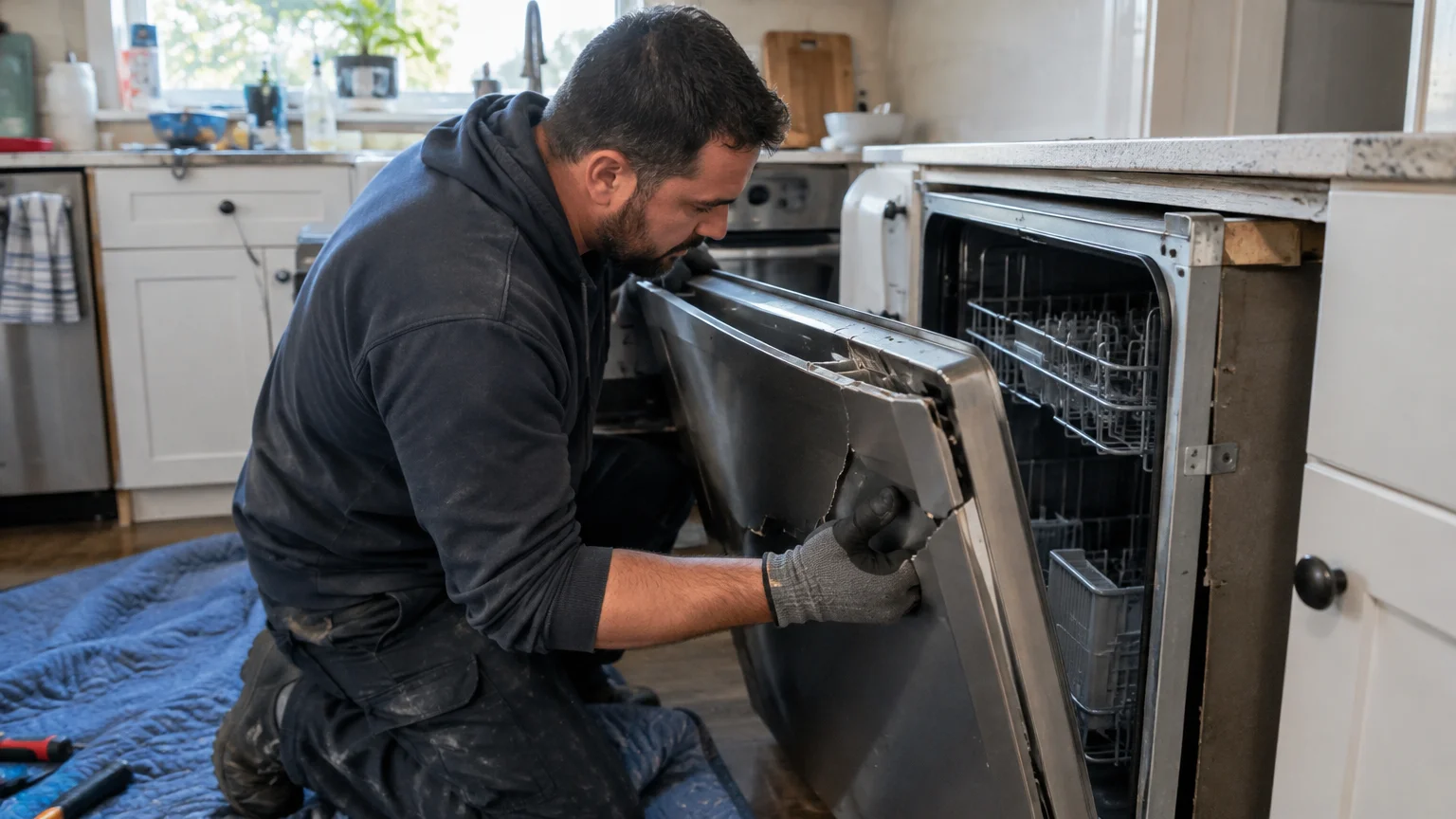
Dishwashers can be removed safely when the water, drain, and electrical connections are handled first. Most built-in dishwashers sit below a counter and attach to nearby cabinets. They may have hidden screws, a tight drain hose, or a hardwired power connection.
A homeowner can empty the racks, remove dishes, and dry the inside. It also helps to clear the floor and move fragile items away from the work area. Ask a qualified installer or service professional to disconnect plumbing or hardwired power when needed.
What homeowners should do before pickup
Make the space below the sink easy to reach if the dishwasher connects there. The main water supply may need to be shut off before disconnection. Towels can catch small amounts of water, but they do not replace proper plumbing work.
Tell the pickup company whether the dishwasher is freestanding, built in, damaged, or already disconnected. A cracked door or sharp metal edge needs careful handling. A clear description helps the crew plan the lift and protect the kitchen floor.
Why built-in appliances may require extra planning
Built-in dishwashers may attach to flooring, cabinets, or trim. Older kitchens can have tight openings or hard-to-reach connections. Removing the appliance may leave a gap that needs a cabinet panel, floor repair, or new appliance installation.
An appliance pickup service usually focuses on removal and hauling. The property owner should ask if another professional must repair the opening afterward. This matters in rental homes, offices, and homes being prepared for sale.
What should you do before an appliance pickup service arrives?
The best preparation is simple: empty the appliance, clear the route, and confirm connection needs. Remove food, clothing, dishes, detergent, racks, and loose parts. Tell the service about stairs, elevators, narrow doors, gates, parking limits, and building rules.
A clear path lowers trip risks and helps protect walls. Keep pets and children away from the work area during pickup. If the appliance is outside, place it where the crew can reach it without crossing unsafe ground.
Clear access paths and empty each appliance
A useful preparation checklist includes:
- Empty shelves, drums, racks, drawers, bins, and other storage areas.
- Remove items stored on top of or inside the appliance.
- Clear rugs, boxes, furniture, and other trip hazards.
- Move fragile items away from the planned exit path.
- Tell the crew about stairs, gates, tight turns, and elevator rules.
Homeowners do not need to take apart a heavy appliance. Cutting panels or removing doors can create sharp edges and loose parts. The crew can choose the moving tools and method that fit the item.
Confirm special disposal and property requirements
Some buildings need manager approval before large-item removal. Commercial properties may set loading times or ask for proof of insurance. A landlord may also need to approve removal of an appliance owned by the property.
Confirm whether the unit contains refrigerant, gas, water, or hardwired power. It is also wise to ask where the appliance goes after collection. Murrieta CA Junk Removal serves local customers and can explain the pickup steps before the appointment.
How do you choose a responsible appliance pickup service?
A responsible appliance pickup service explains its safety process and asks useful questions. It should understand the difference between a refrigerator, gas range, washer, dryer, and built-in dishwasher. It should also explain when a plumber, electrician, or other qualified worker must disconnect an appliance.
A full-service junk removal company may handle more than one item in one visit. This can help owners preparing a rental, office, garage, basement, attic, or whole property. Still, the company should confirm accepted items and access needs instead of making broad promises.
Questions about recycling, disposal, and safety practices
A property owner can ask:
- Which appliances does the service accept?
- Who must disconnect gas, water, or hardwired connections?
- How are refrigerators and freezers handled?
- Which materials are sent for recycling?
- Are built-in appliances reviewed before pickup?
- What access details should be shared before the visit?
These questions help owners compare professional junk removal services. They can also prevent a failed pickup caused by an unsafe connection or blocked route.
When professional pickup is the better option
Professional pickup is often best when an appliance is heavy, damaged, built in, upstairs, or hard to reach. It also helps when the owner lacks moving tools or wants to avoid a back injury. Simple tasks such as emptying, wiping, and clearing access can be done by the homeowner.
After collection, the owner should know what happens next. Responsible disposal may include recycling metal, recovering regulated materials, and sending remaining waste to an approved facility. Murrieta CA Junk Removal can discuss appliance removal needs and site access with property owners.
Key takeaways
- An appliance pickup service can often remove six common appliance types.
- Refrigerators and freezers need careful handling because they contain refrigerant.
- Gas, water, and hardwired connections should be handled by qualified professionals.
- Homeowners should empty appliances and clear safe access paths.
- Responsible services explain recycling and disposal steps before pickup.
Frequently Asked Questions
What happens to old appliances after pickup?
Old appliances are usually checked and separated by material. Metal, motors, wiring, plastic, and other parts may go to different recycling or disposal streams. Refrigerators and freezers need special care because of their cooling chemicals. The final route depends on the appliance and the receiving facility’s rules.
Can one service remove appliances from a garage, attic, and basement?
Many full-service junk removal companies can remove items from several areas during one visit. Describe stairs, low ceilings, narrow doors, and long carrying paths first. Heavy appliances may need extra planning, moving tools, or another qualified worker for disconnection.
Can a homeowner leave food inside an old refrigerator?
No. Remove food, ice, liquids, and loose shelves before collection. Cleaning the inside also helps reduce odors and leaks. Describe a damaged refrigerator in advance, especially if it has broken glass, sharp metal, or a door that will not close.
Can an appliance pickup service remove a hot tub or mattress too?
Some full-service junk removal companies also handle hot tubs, mattresses, furniture, and other large items. These items may need special tools and more than one worker. List every item before pickup so the crew can confirm what it accepts and plan the route.
Can homeowners disconnect appliances themselves?
Homeowners can empty appliances, clean them, and clear the work area safely. Gas, plumbing, and hardwired electrical connections are different. Those tasks may need a licensed or qualified professional. The pickup company should confirm what must be disconnected before workers arrive.
Conclusion
Safe appliance removal starts with a clear plan. Identify the appliance, empty it, clear the route, and arrange qualified disconnection when needed. A responsible pickup service then focuses on careful lifting, proper transport, and sensible recycling or disposal.
Contact us to arrange appliance pickup with Murrieta CA Junk Removal.